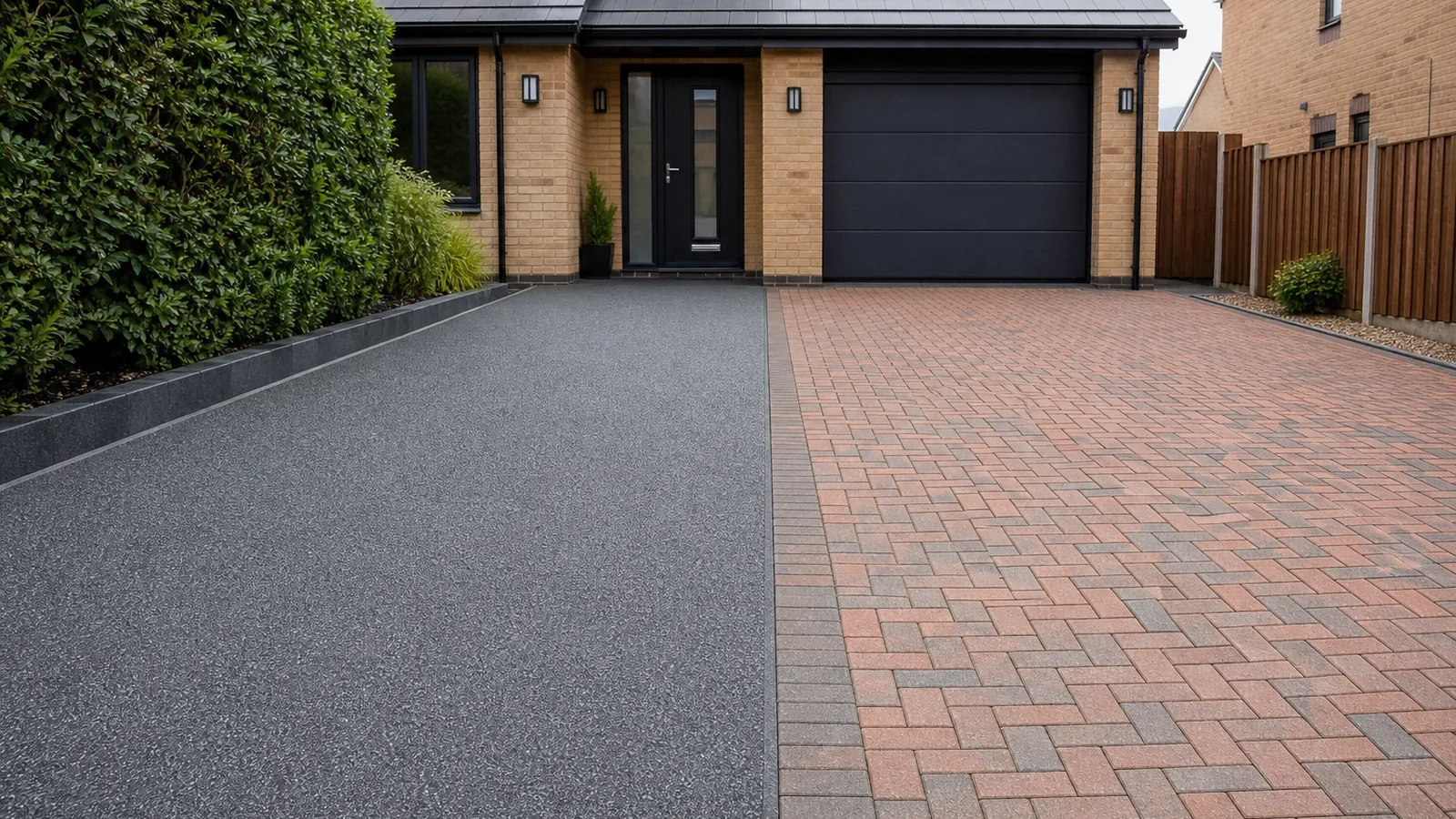
Choosing between resin bound surfacing and block paving is one of the most common decisions facing UK homeowners planning a new driveway. Both are premium options — but they behave very differently over a 20-year lifespan.
Groundworks and installation
Block paving requires a fully excavated sub-base for every project. Resin bound surfacing can often be laid directly over a sound existing surface — avoiding excavation altogether, shortening the programme and reducing site disruption. Every Resi-Tech survey confirms which approach suits your driveway and provides a bespoke written specification.
Maintenance over 20 years
This is where the two diverge. Block paving's hundreds of sand-filled joints invite weeds, moss and ants, and most drives need re-sanding and sealing every 2–3 years. Resin bound surfacing is seamless: there are simply no joints to fail. An occasional sweep and an annual jet wash is all it needs.
Blocks can also settle and rut under vehicle turning points, requiring lifting and relaying. A correctly installed resin surface over an engineered base will not rut.
Drainage and planning
Resin bound surfacing is fully permeable and SuDS compliant, so it falls under permitted development for front gardens. Standard block paving is impermeable — over 5m² you'll need drainage provision or planning permission.
The verdict
If you love a traditional patterned look and don't mind ongoing upkeep, block paving remains a fine choice. If you want a seamless, contemporary finish with near-zero maintenance and better drainage, resin bound surfacing wins on almost every measure. Request a free Resi-Tech survey and we'll specify both options honestly for your property.