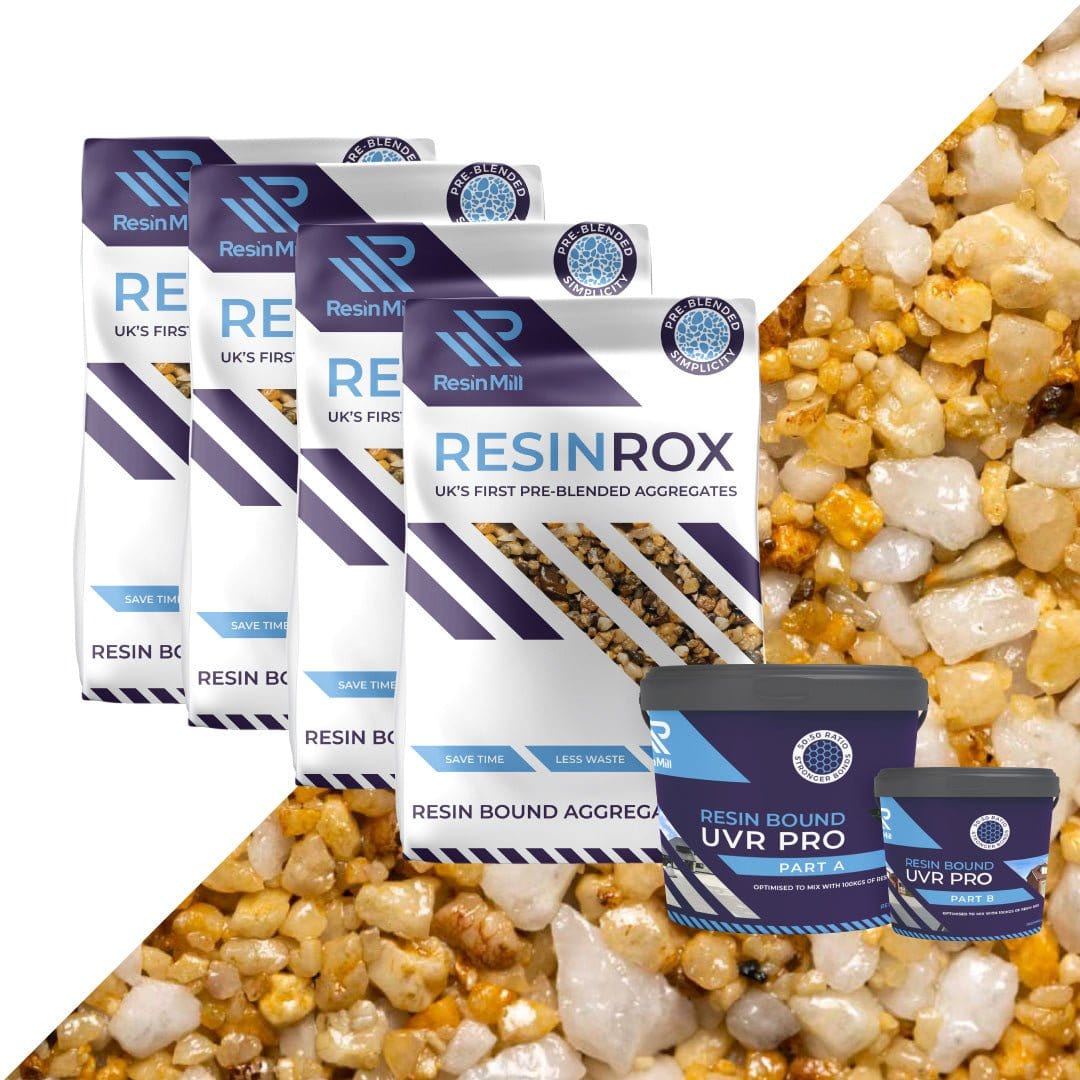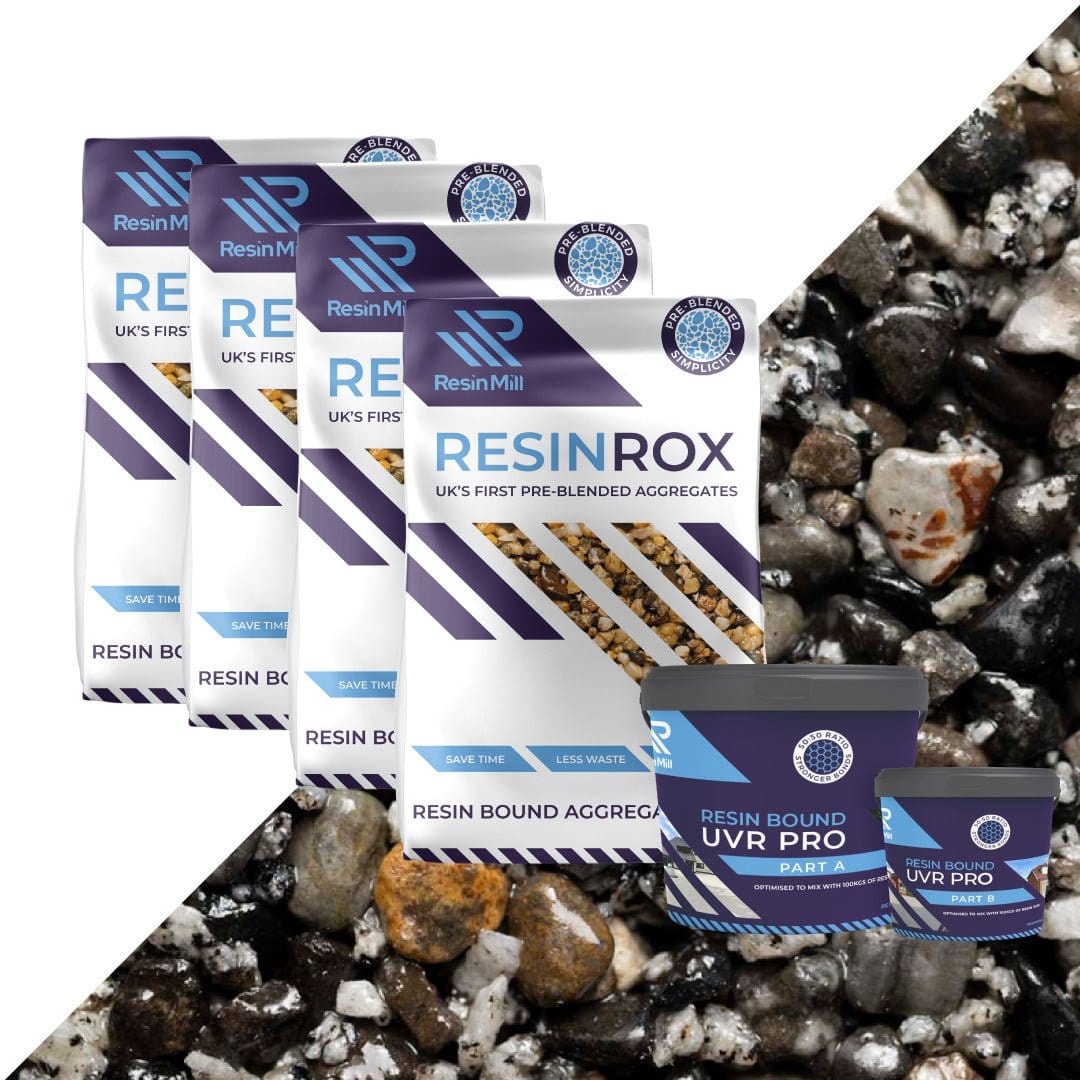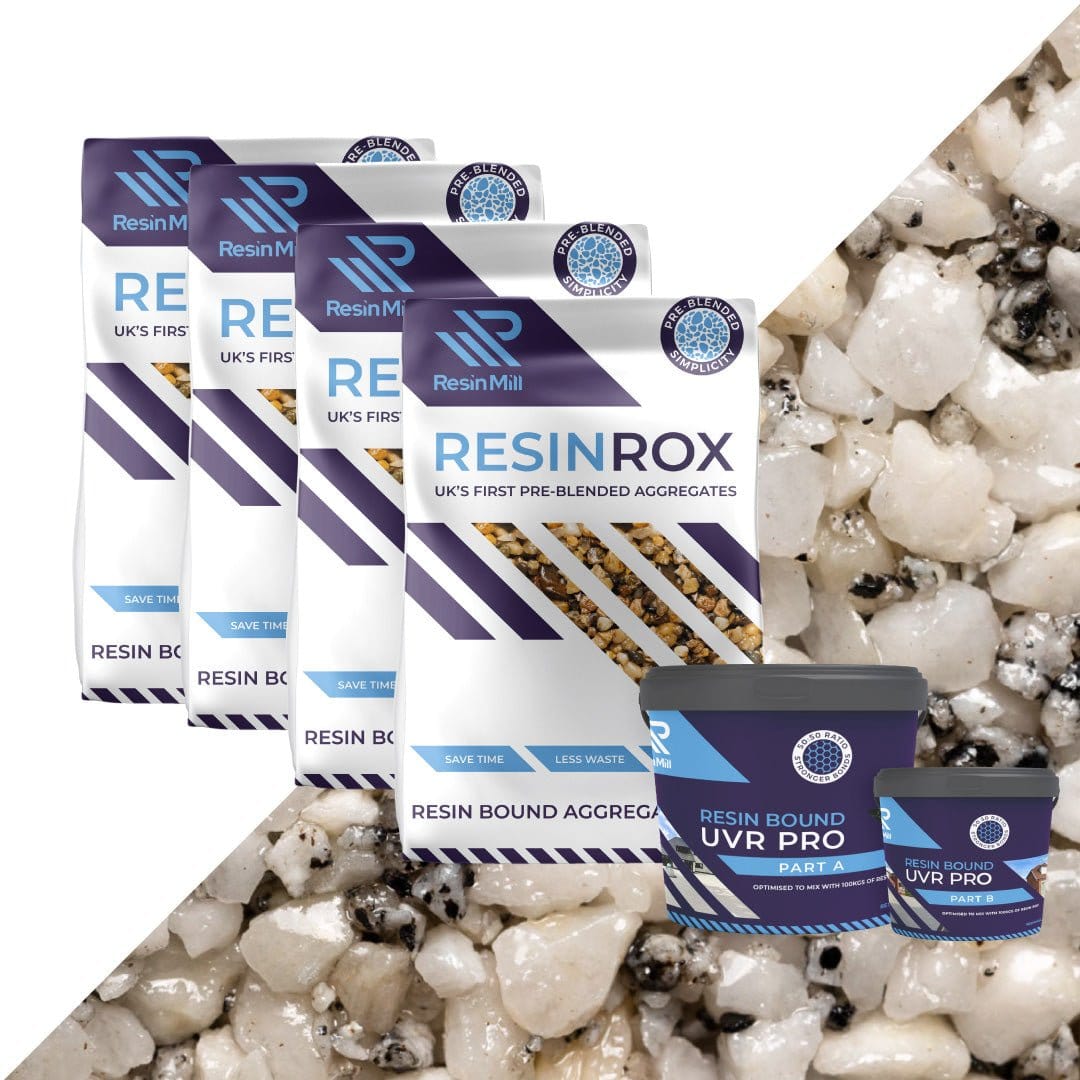
Loose gravel is the classic English country driveway — and for good reason. It drains beautifully, it is inexpensive, and the sound of tyres on gravel is unmistakable. But every gravel owner also knows its frustrations: the migration, the weeds, the tyre ruts and the stones flicked into flowerbeds and paintwork.
The same look — locked in place
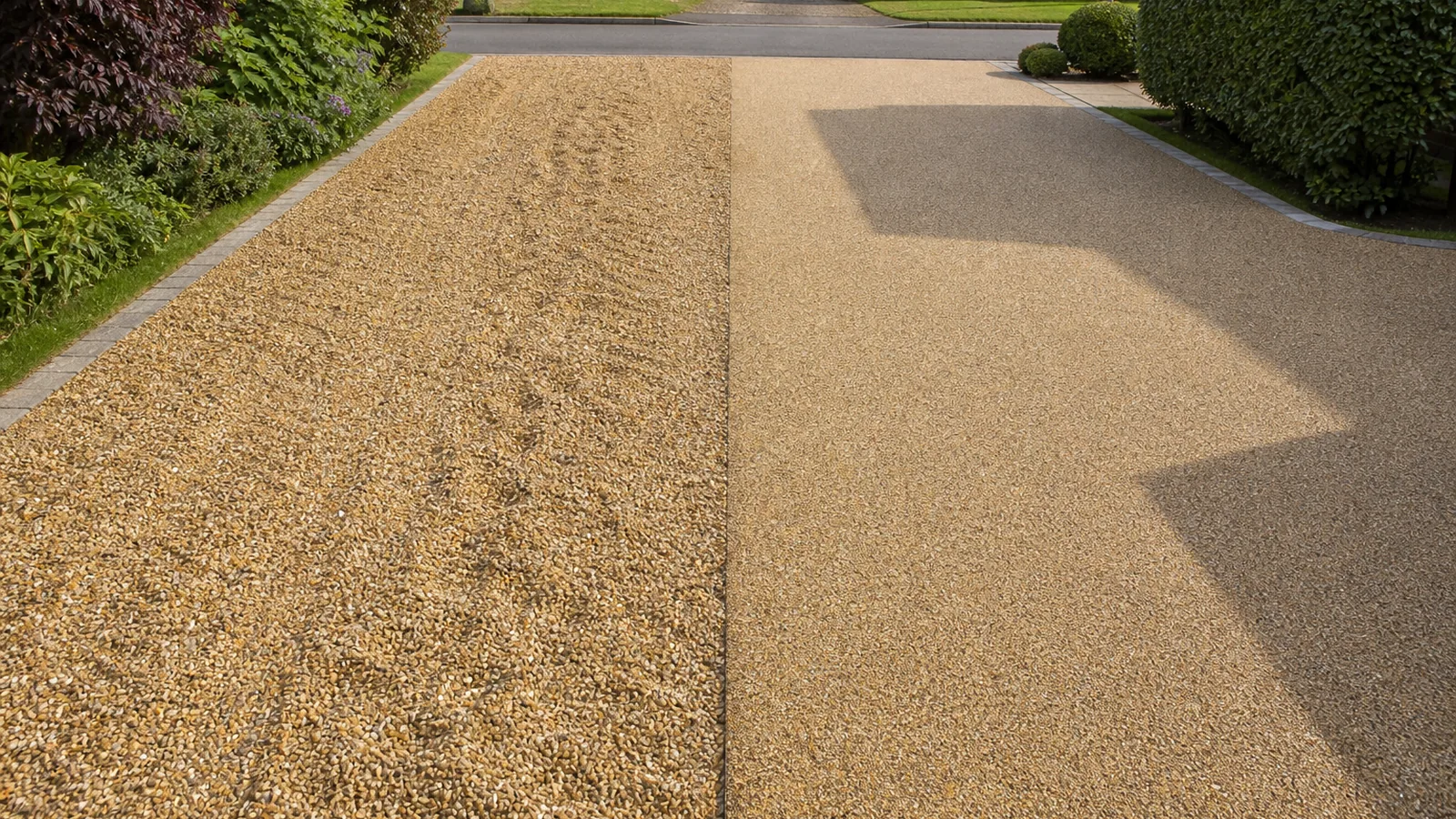
Resin bound surfacing uses the same natural aggregates as loose gravel, but every stone is coated in a clear resin and trowelled to a smooth, level finish. You keep the aggregate texture and colour palette; you lose the migration and the mess. Buggies, wheelchairs and stiletto heels all cross it without issue.
Weeds, ruts and edging
Loose gravel drives typically need topping up every few years and weeding every few weeks in summer. Turning circles quickly develop bald spots and ruts. Resin bound is seamless and jointless, so weeds have nowhere to root and the surface cannot rut. There are no edging boards to rot or spring apart.
Drainage and SuDS
Both surfaces drain well. Loose gravel drains between stones; resin bound drains through the void matrix between coated stones into a permeable base. Both approaches are compatible with UK SuDS rules for front gardens, so planning permission is usually not required.
Which to choose
If you own a rural property, love the sound of tyres on stone and are happy raking the drive every fortnight, loose gravel remains lovely. If you want the same natural look without any of the practical downsides, resin bound is the direct upgrade. Many of our customers move from loose gravel and describe it as the single biggest quality-of-life change they have made to the property.