Search for resin driveway problems online and you will find dozens of horror stories. Almost all of them trace back to the same handful of installation mistakes. Here is what actually goes wrong on a resin bound surface, why it happens and how a specialist installer prevents it.
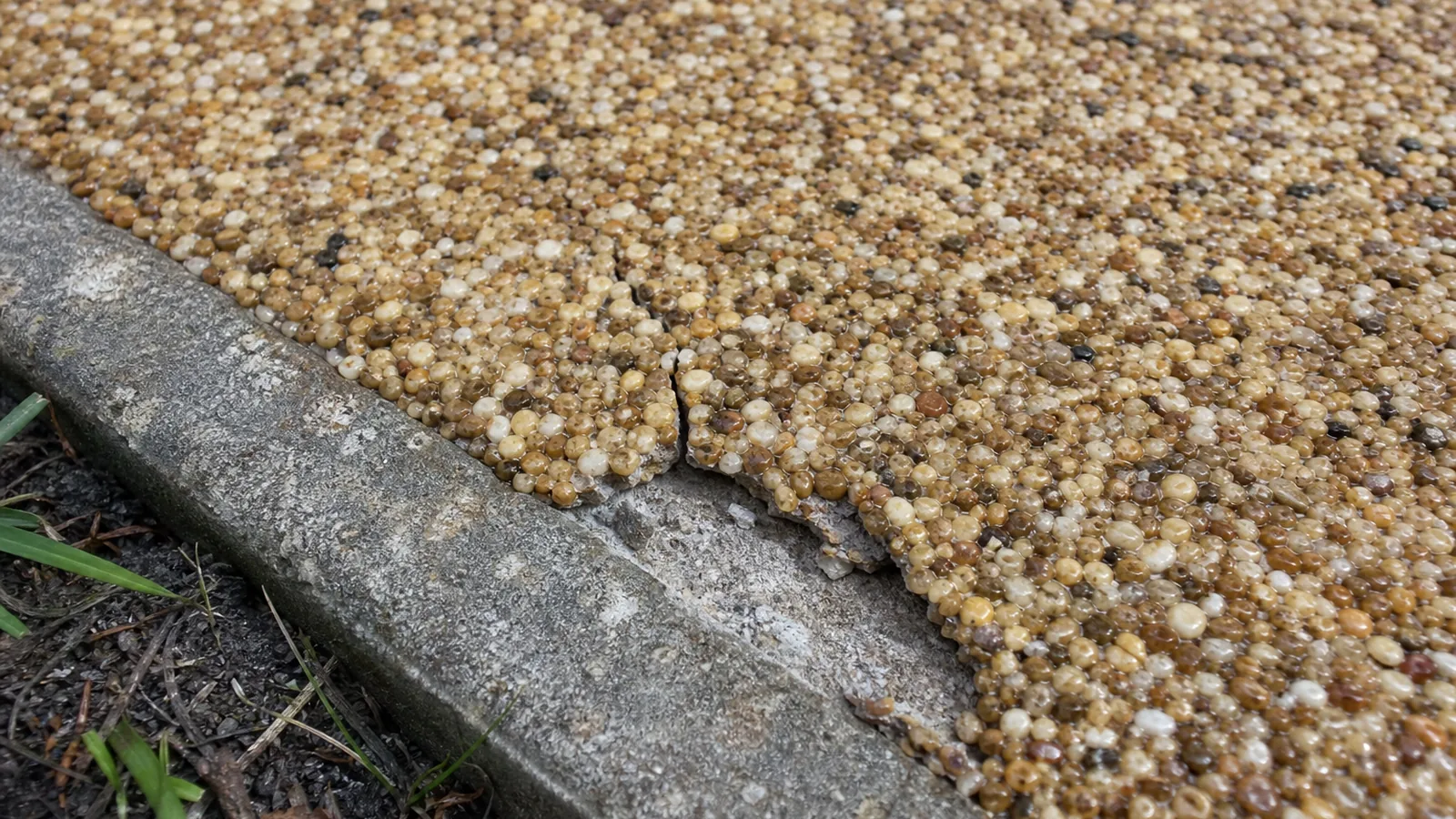
Delamination (surface lifting)
Cause: laying resin over a damp, dusty or contaminated base. The bond between resin and base fails and sheets of surfacing peel up.
Prevention: moisture meter readings before mixing, mechanical brushing of the base and a resin primer where the base is at all porous.
Whitening or blooming
Cause: rain during cure, or cold and damp weather driving moisture into the freshly mixed resin. Produces a milky haze across the surface.
Prevention: weather-window discipline. We do not lay resin bound below the manufacturer's minimum temperature or when heavy rain is forecast within the cure window.
Ponding and puddles
Cause: incorrect falls on the base, or a base that has slumped where sub-base compaction was skipped.
Prevention: falls are laser-checked before and after base preparation, and every sub-base is compacted in layers with a plate or roller sized for the material.
Ravelling (loose stones)
Cause: incorrect resin-to-aggregate ratio, poor forced-action mixing, or aggregate that was not dry when mixed.
Prevention: calibrated mixers, dry-stored aggregate bags and mix ratios by weight, not by eye.
Colour fade and yellowing
Cause: use of aromatic resin rather than aliphatic (UV-stable) resin. Aromatic resins yellow visibly within 2–3 years.
Prevention: Resi-Tech uses only UV-stable aliphatic resin. Every material batch is documented in your handover pack.
How to choose a safe installer
Ask any prospective installer three questions: What resin do you use and can I see the datasheet? What is your written weather policy? Do you moisture-meter the base before mixing? If the answers are vague, keep looking. A specialist will welcome those questions.